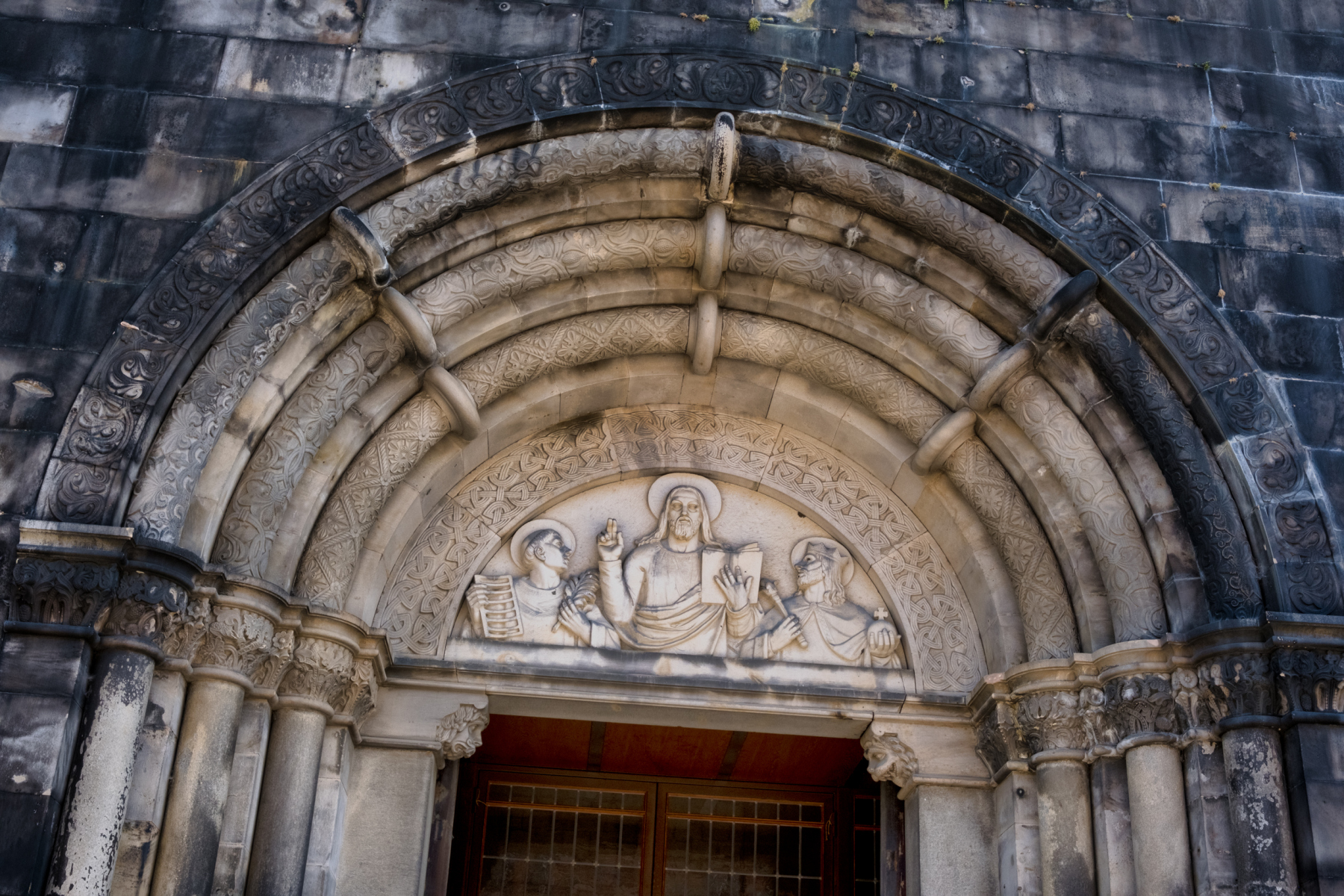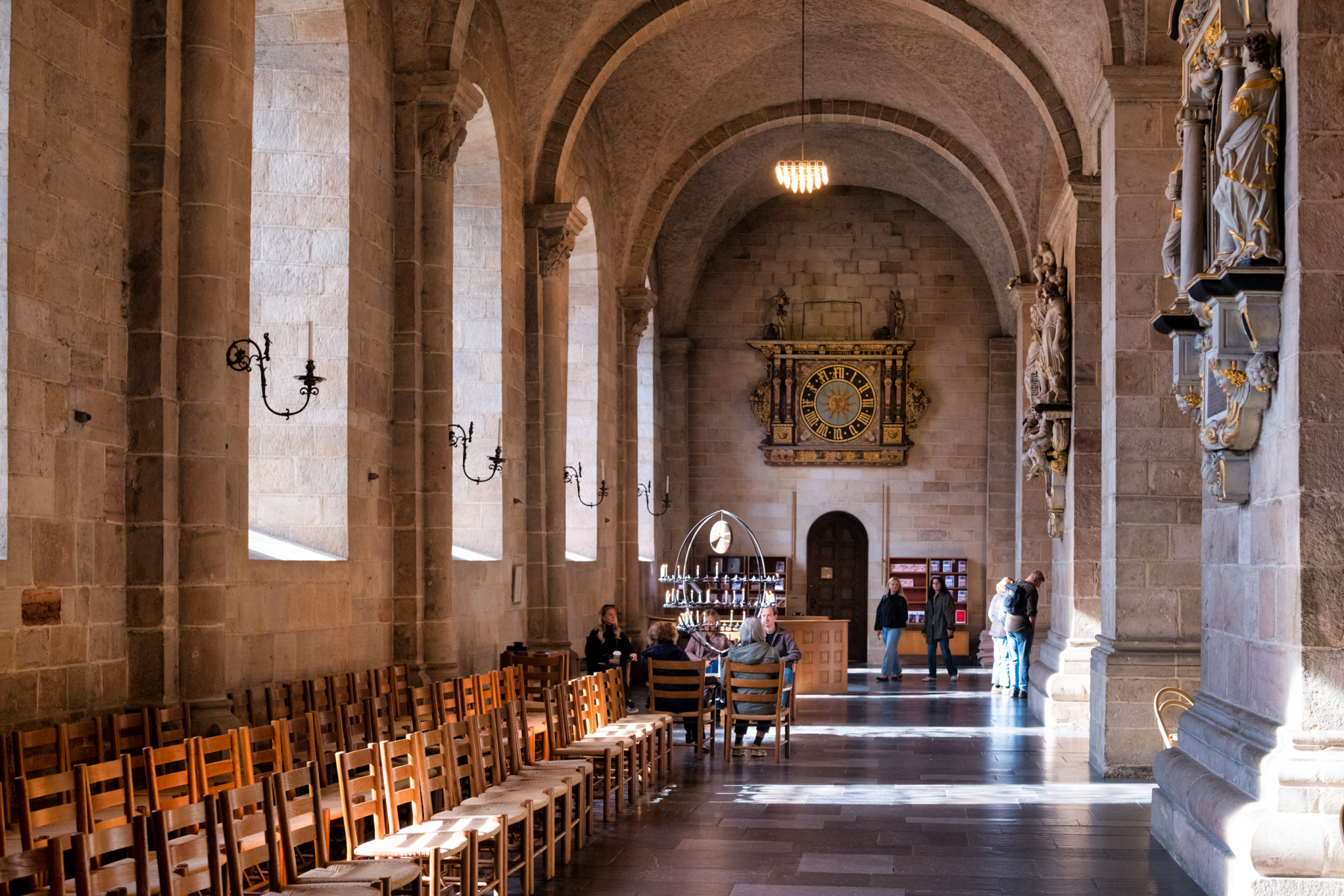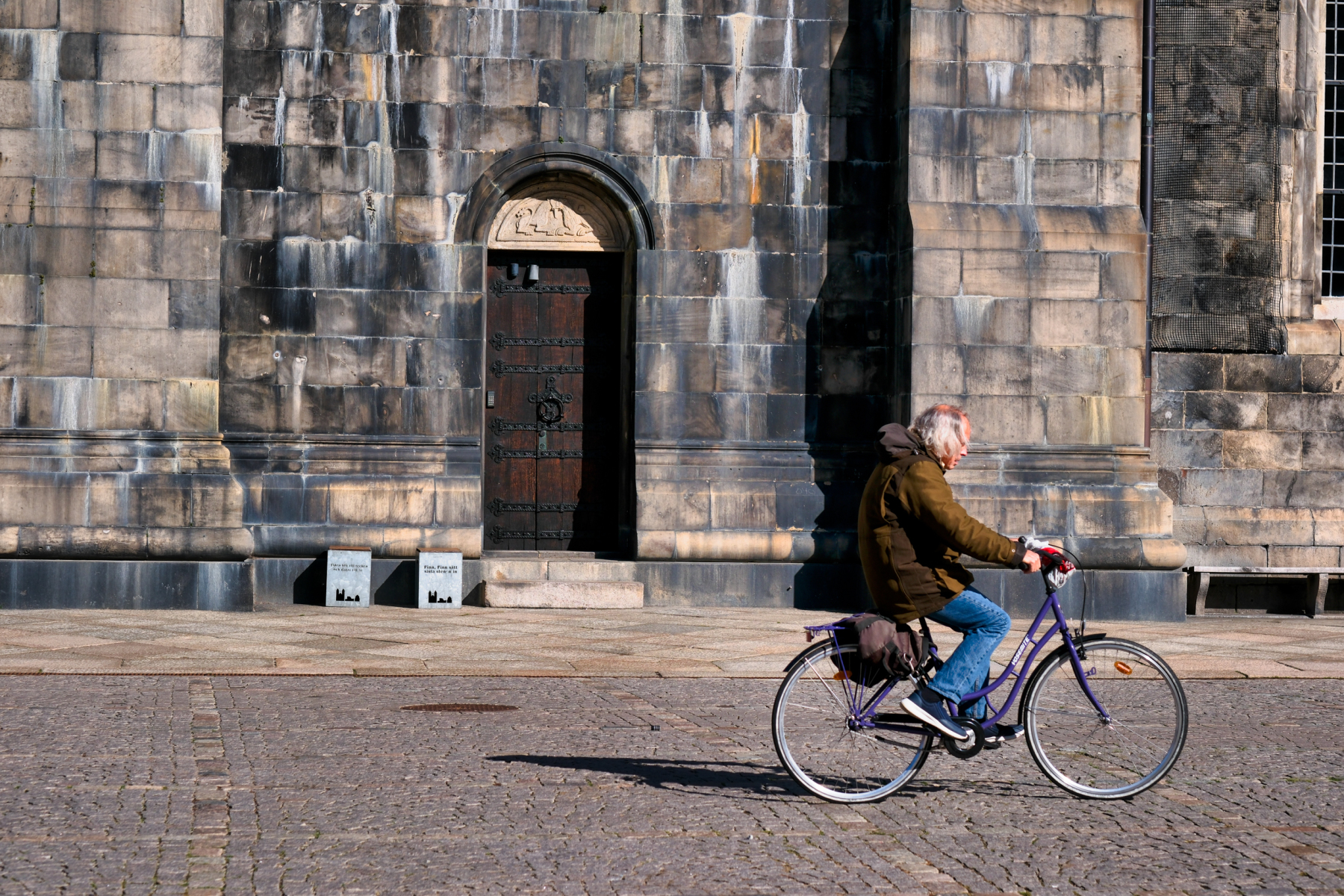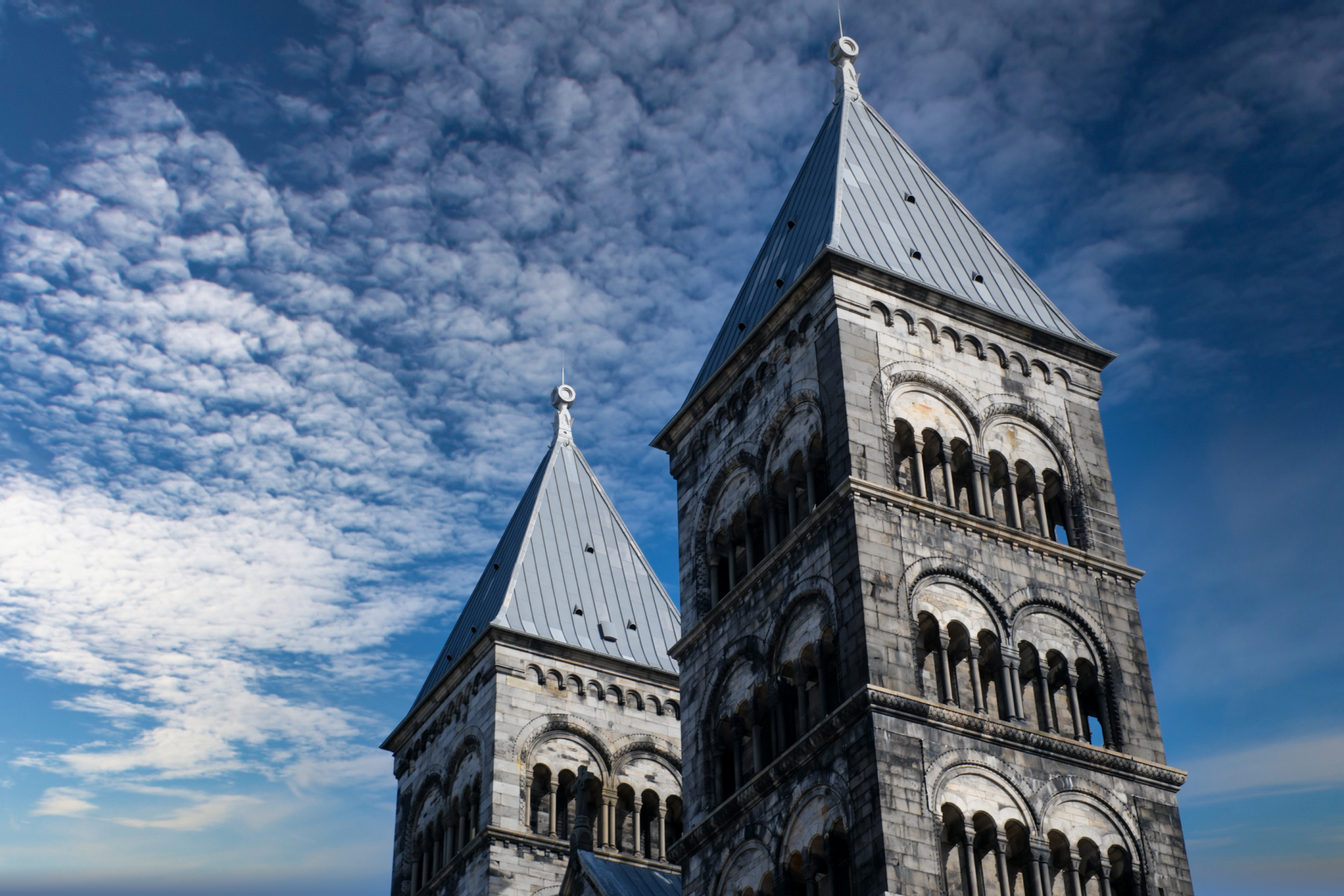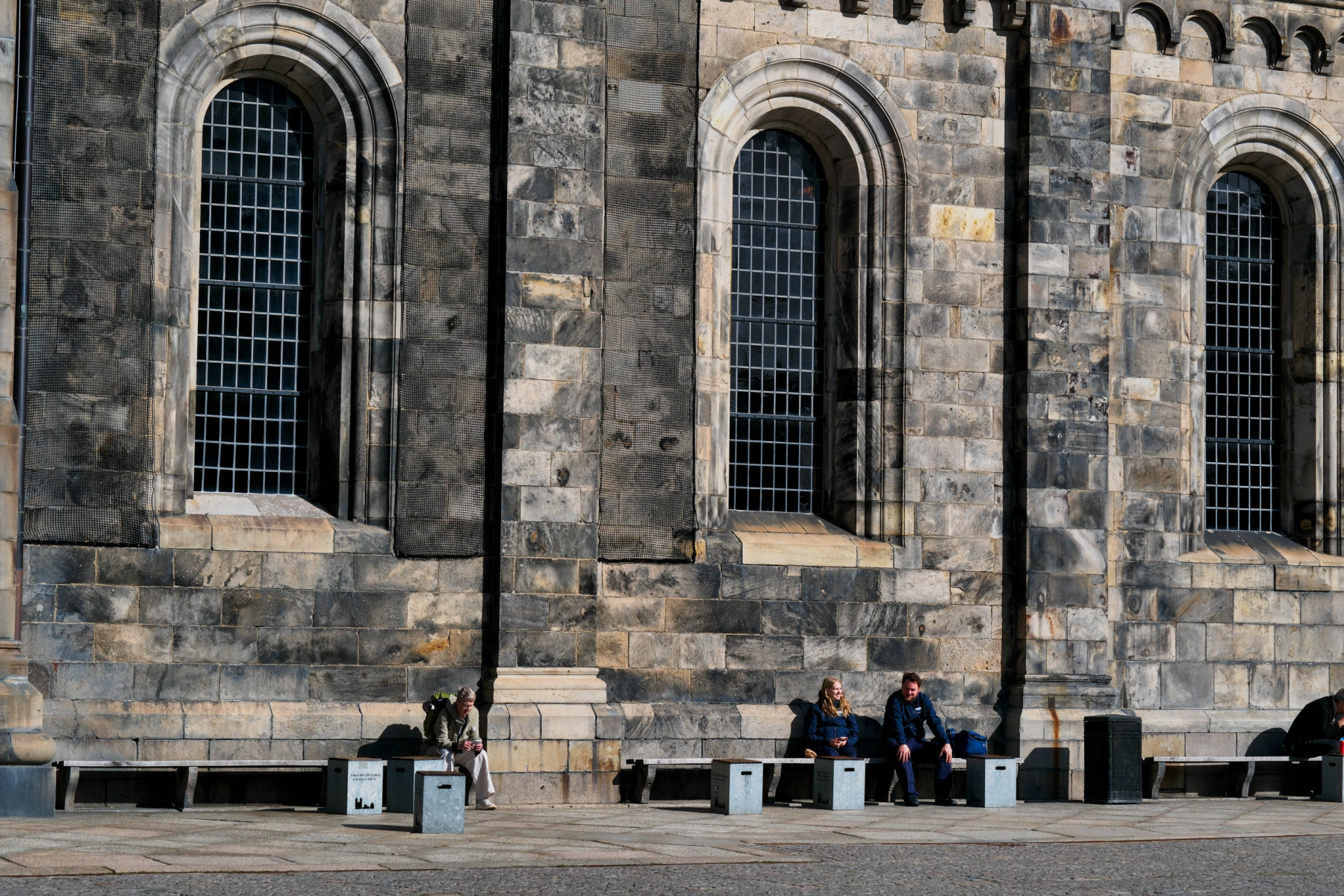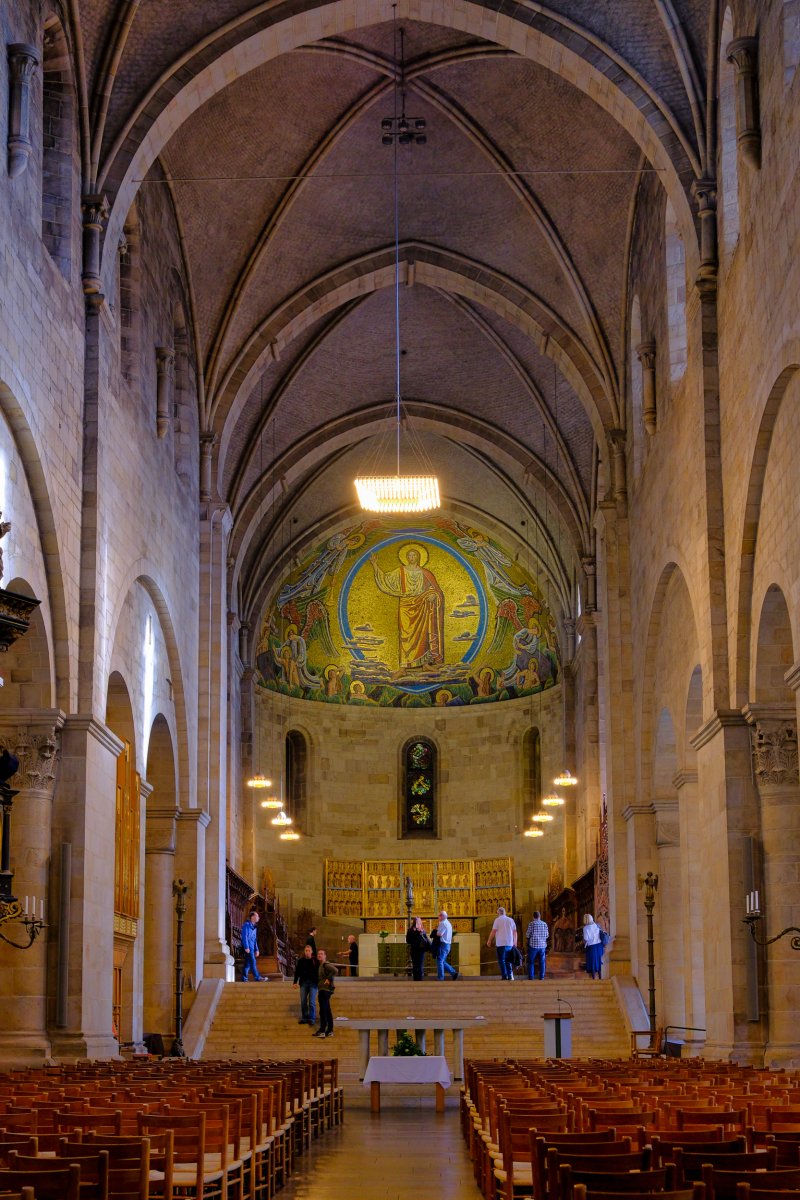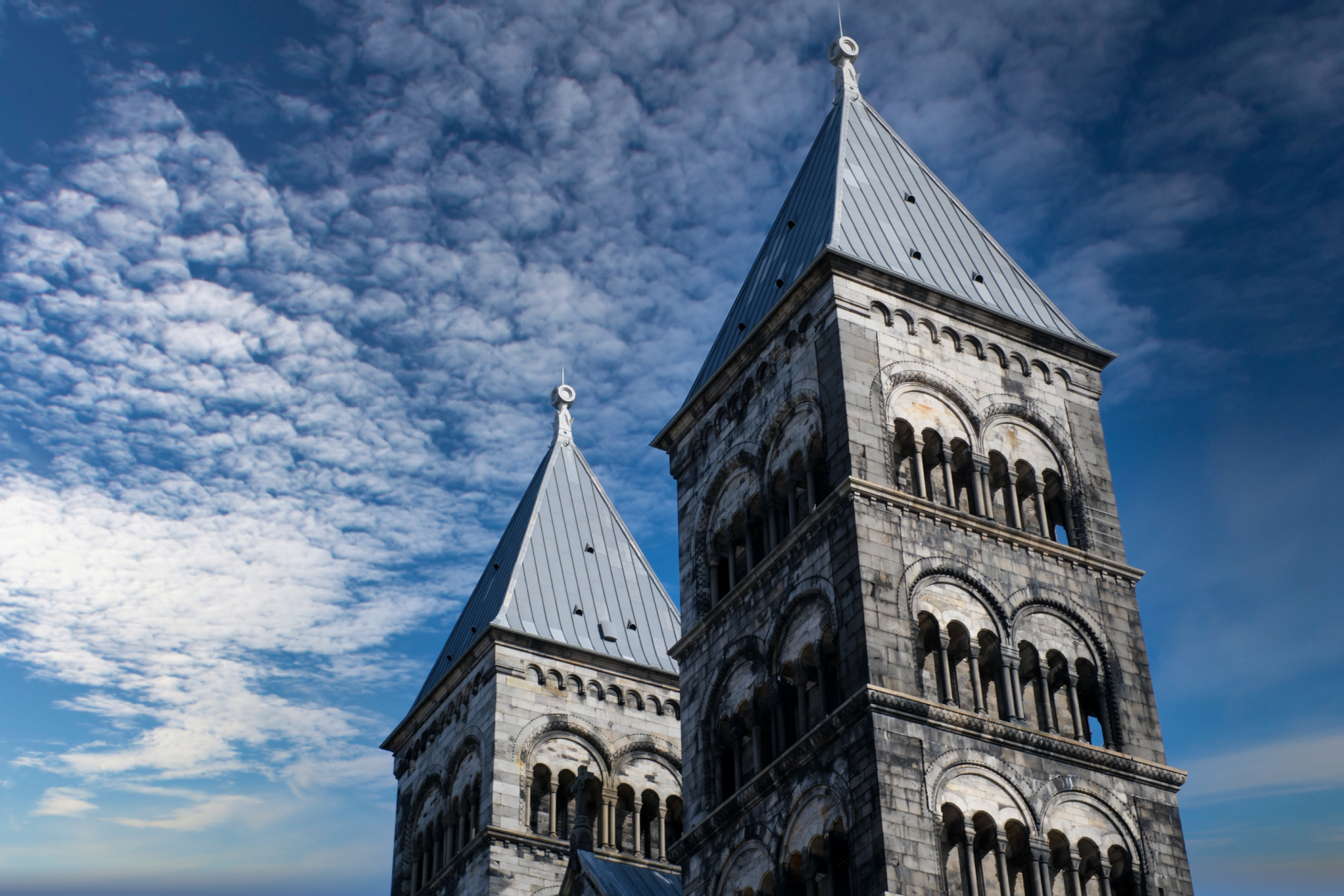
Located just 50 minutes by car from Tomelilla, Lund is a historic university town built around its central masterpiece: Lund Cathedral (Lunds domkyrka). Construction began around 1081 under King Canute IV of Denmark, with the high altar consecrated in 1145. Built primarily from local Höör sandstone, it remains one of the finest examples of Romanesque architecture in the Nordic region.
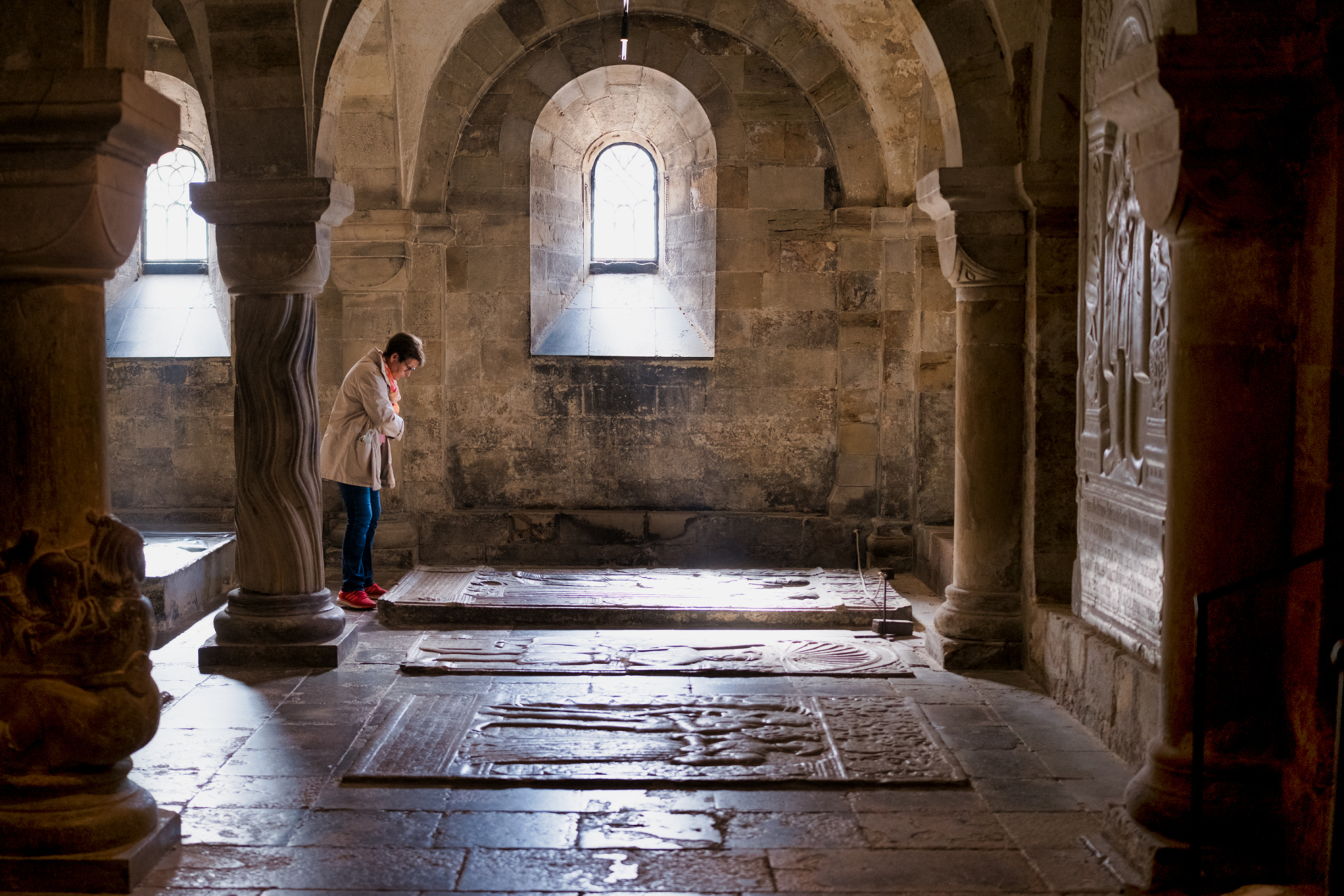
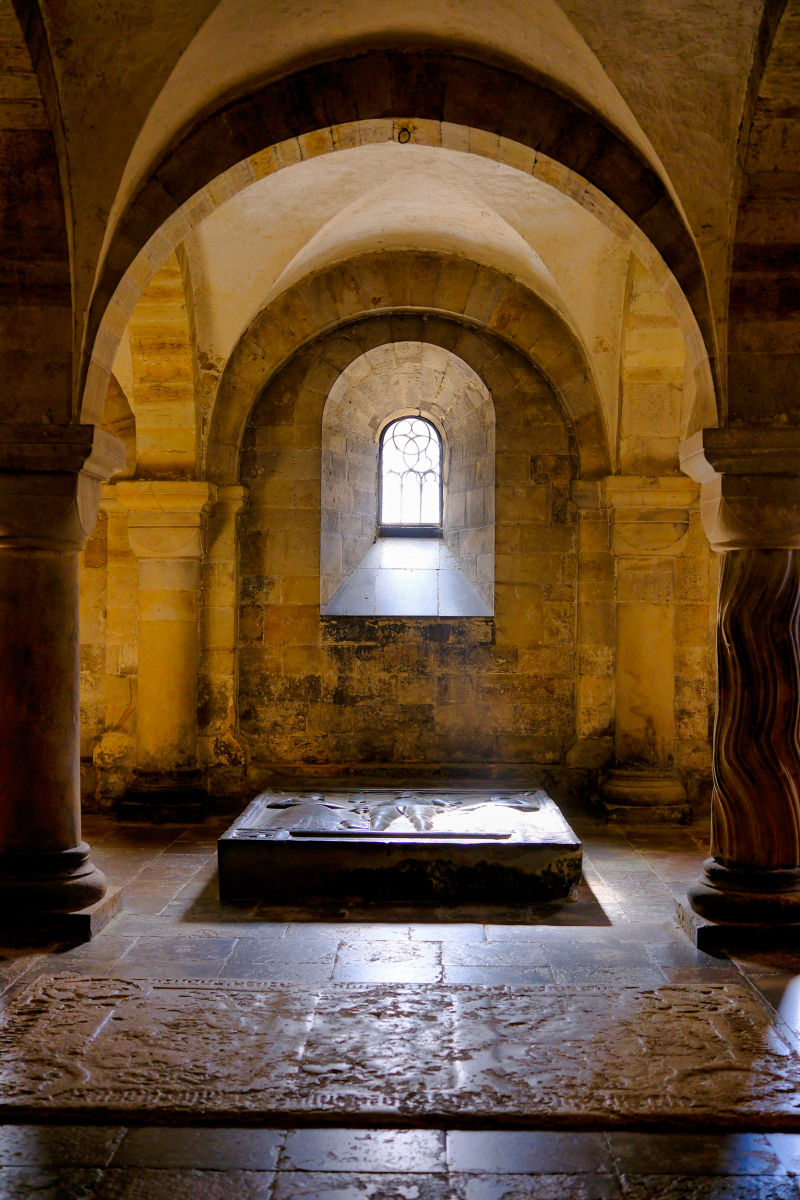
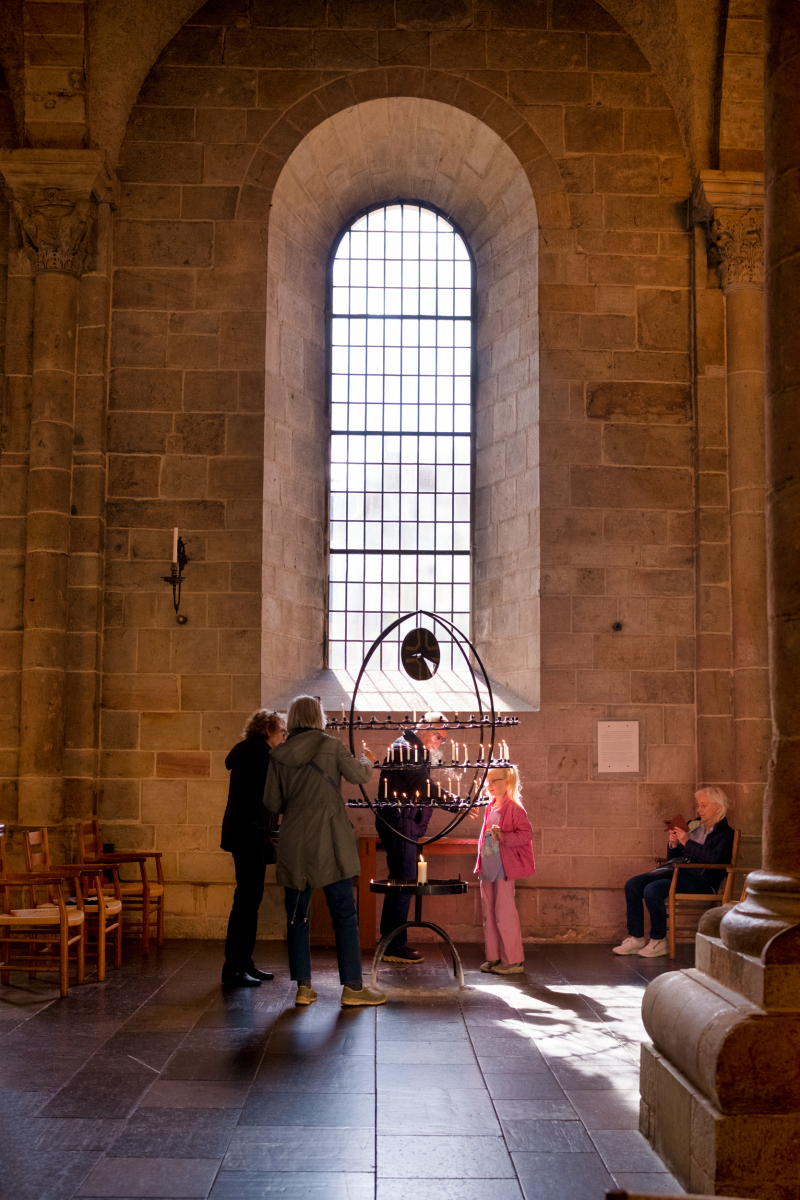
Inside, light and shadow play constantly across the massive stone arches and the dark medieval crypt, making every visit a fresh discovery for photography.
Key Highlights & Folklore
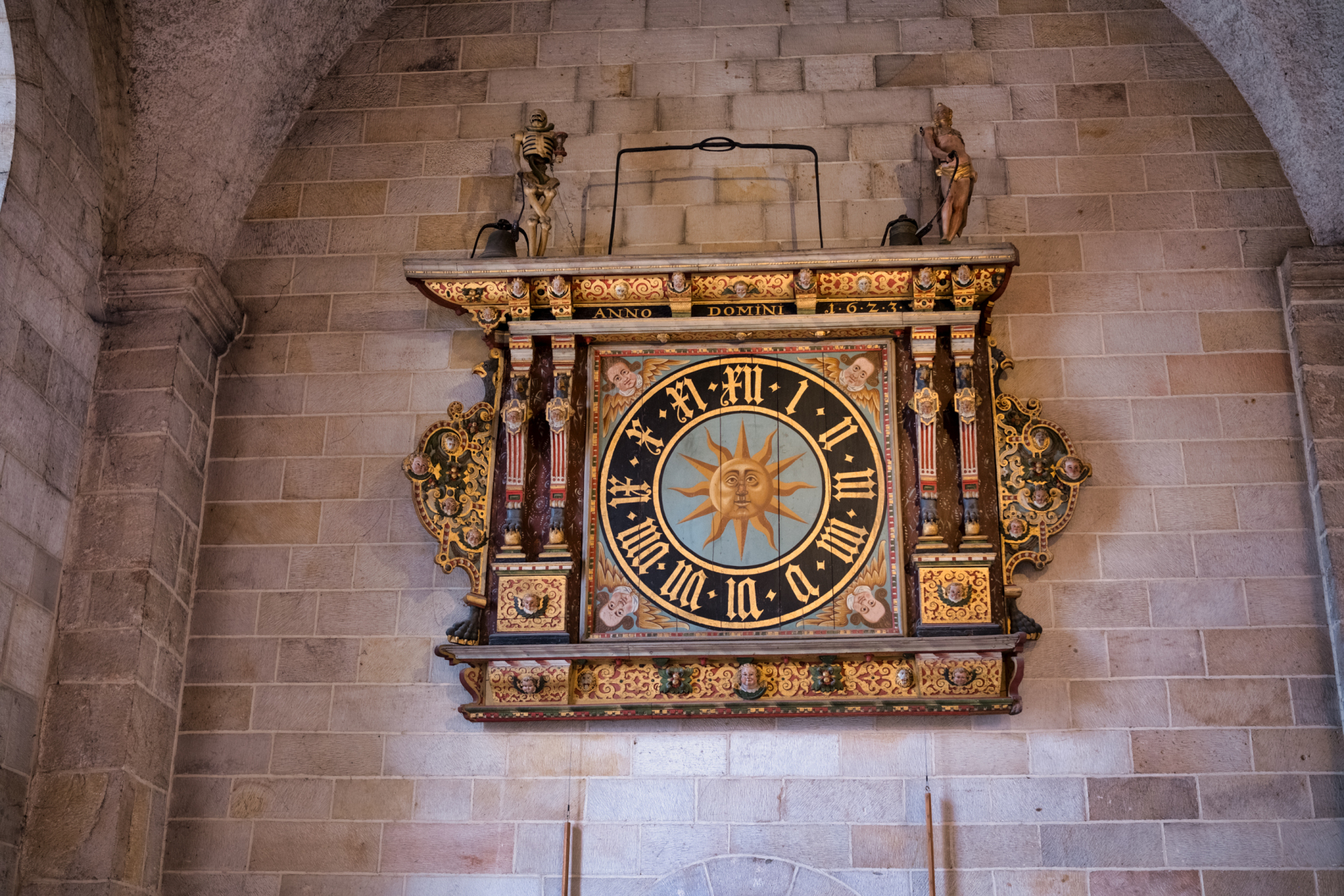
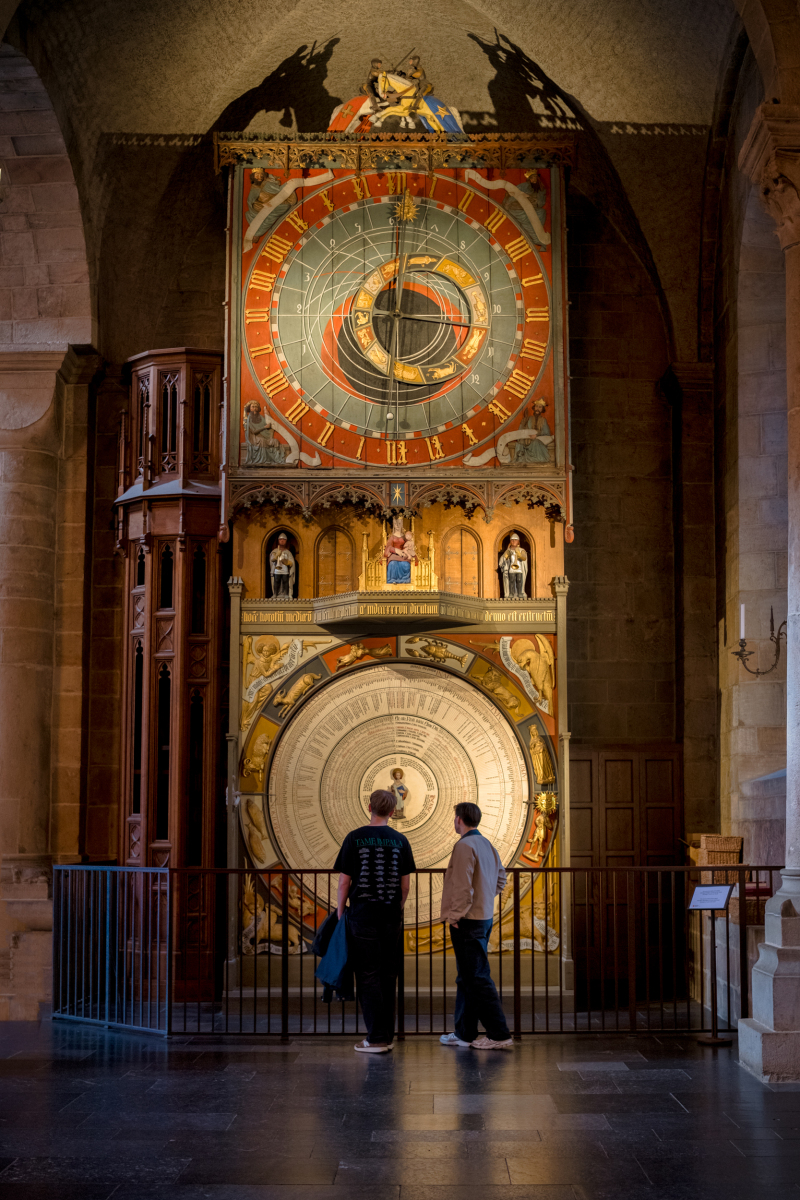
Horologium Mirabile Lundense (The Astronomical Clock): Dating back to roughly 1424, this intricate mechanical clock sits near the entrance. Twice daily, its automated figures of the Three Kings emerge to pay homage to Mary and the infant Jesus as the organ plays In dulci jubilo. It tracks time, celestial alignments, lunar phases, and astrological signs.
The Legend of Jätten Finn (Finn the Giant): Down in the Romanesque crypt stand 41 stone pillars. One pillar is wrapped in the stone arms of a carved figure. According to Scandinavian folklore, a giant named Finn built the cathedral for Saint Lawrence (Sankt Lars). If Saint Lawrence could not guess the giant’s name before the building was finished, Finn demanded the sun, the moon, or Saint Lawrence’s eyes. Right as the last stone was laid, Lawrence overheard Finn’s wife singing his name in their cave. Lawrence called out “Finn!”, breaking the spell and turning the giant to stone as he tried to tear down the column.
Essential Cathedral Facts
Feature Details
Architectural Style Romanesque (with 19th-century restoration by Helgo Zettervall)
Construction Period Initiated c. 1081; High Altar consecrated 1145
Material Sandstone quarried from Höör
Twin Towers (“Lunna pågar”) 55 meters tall, restored in the late 1800s
Crypt Unaltered since 1123, containing 41 carved columns
/