After years of shooting with Hasselblad, I came to a realization that fundamentally changed how I view photography: perfection is boring.
High-end, technically flawless gear is incredible for precision, but clinical perfection rarely translates to art. Real life isn’t sterile. It has a little grit, slightly wacky colors, an imperfectly placed blur, and blown-out highlights that catch the eye. Art lives in the unexpected texture of a scene.
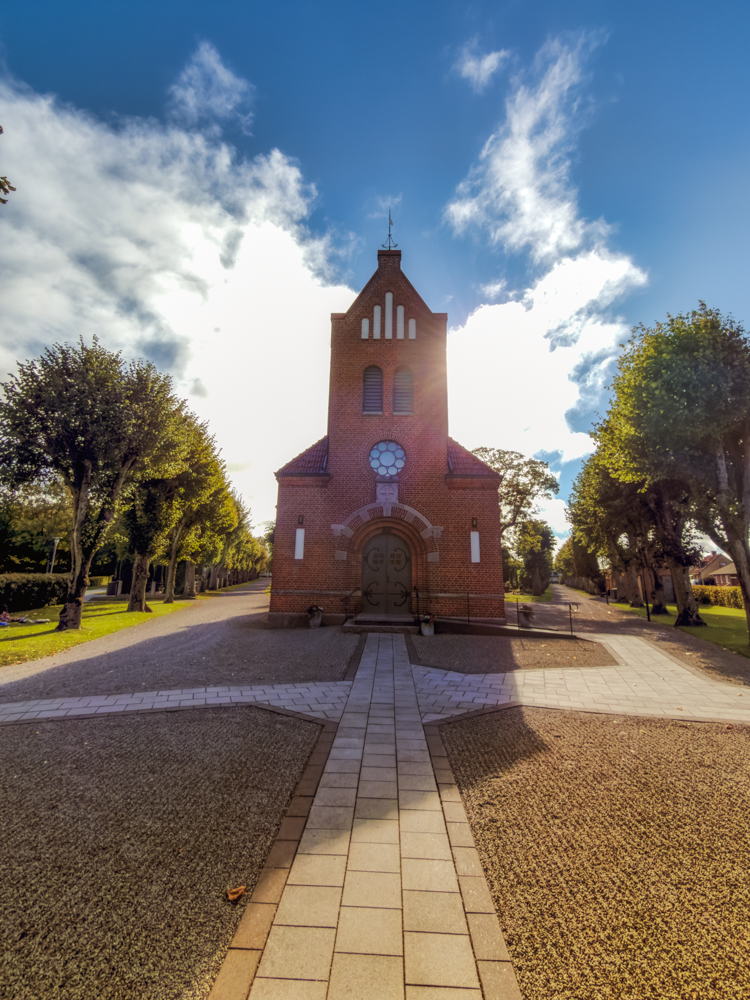
Curious to test a different kind of constraint, I decided to take a casual walk around the neighborhood with my iPhone 16 Pro, using our local church as the subject.
Apple’s ultra-wide 0.5x lens is, by traditional optical standards, downright bad. Yet, in this specific context, its shortcomings became its greatest strength—giving the frame a raw, unpolished edge that you just can’t manufacture. The harsh light hitting the open area in front of the church fell together nicely, and I found myself genuinely drawn to the blown-out highlights.
And yet, despite finding a moment of accidental magic, it confirmed what I already suspected: smartphone photography ultimately leaves me cold. The images still feel a bit too safe, and the interface is far too clunky for my taste. Shooting should be a tactile, intuitive experience, not a chore of fighting against a glass screen.
An interesting experiment, no doubt. But I’ll gladly leave the digital compromises behind and head back to my Fujifilm cameras, where photography actually feels like photography.